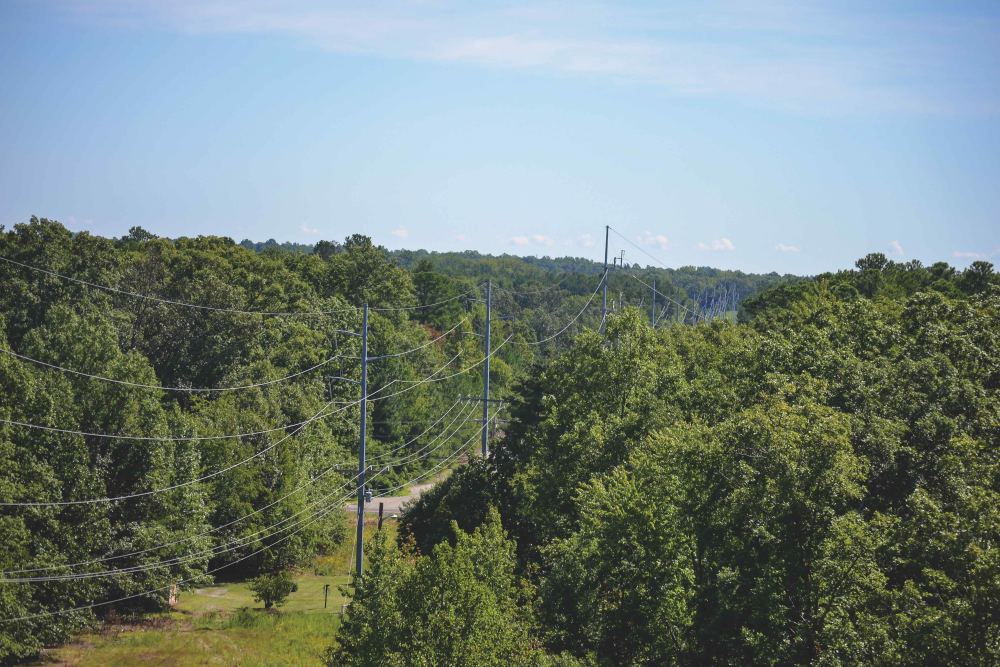
For nearly a century, power lines spanning wooden poles have been a familiar feature of the rural Virginia landscape. That basic pole and crossarm design, seemingly unchanged since its first use, hints at timelessness and days gone by. It's easy to assume the power lines and grid connected by them are also as timeless and unchanged as the simple poles.
In fact, those power lines deliver energy from a grid that uses ever-changing technology to more effectively and reliably meet increasing demand, more quickly restore service when it's lost and develop increased resilience to weather and other impacts.
Constant improvements are essential for grid reliability. It's why REC is continuously modernizing its grid across its 22-county service territory.
Building a Better Grid
REC is upgrading its electric distribution system to improve reliability and help crews restore power faster.
The Cooperative is following a long-term system plan and replacing aging infrastructure across its service area, while strengthening lines, increasing capacity and building a more resilient system.
"Lines are being rebuilt for bigger equipment and greater capacity. Redundancy is a key word right now," said Nathan Fewell, director - distribution design.
Those data-driven upgrades, along with sturdier equipment and added capacity, help REC respond to record consumer load growth.
"This type of development across our service territory varies quite a bit. It affects how members use electricity and the demand placed on our system," said Fewell.
Expanding the Broadband Network
REC is leading the way in expanding broadband in rural areas by building fiber infrastructure on its electric system. In the process, the Cooperative is strengthening poles, improving system redundancy and making the electric system more resilient for members. From establishing an 800-mile fiber utility network that vastly improves REC's communications across its entire territory to connecting more than 12,000 members to high-speed internet through its partnership with Firefly Fiber Broadband, REC is building a network that increases reliability and improves quality of life for members.
"We're reinforcing and strengthening our system. The work is decreasing outages in our outage prone areas. Overall, it's a more resilient system that benefits members," said Mark Ponton, senior director - broadband and fiber services.
Even those wooden poles that give many rural landscapes a timeless look, despite their appearance, are not always the same poles they were even just a decade ago. The Cooperative has replaced more than 10,000 poles with larger, taller poles to accommodate fiber attachments. By supporting more than 68,000 pole attachments and dark fiber leasing, REC is bridging the digital divide in rural Virginia.
Through REC's leadership and infrastructure investments, internet service providers have greatly expanded broadband access in 20 counties in the Cooperative's service area since 2021.
Power Reliability with Battery Storage
REC is also investing in utility-scale battery energy storage systems (BESS) as another tool to support the electric system. These large batteries can store electricity and send it back to the grid when demand is high or the system is under stress, helping REC improve reliability, manage peak power costs and serve growing energy needs.
First and foremost, these systems provide a powerful reliability measure. REC's current 2-megawatt (MW), 8-megawatt hour (MWh) BESS can power 1,000 homes for eight hours, providing seamless power even during major regional outages.
Reliability is not the only benefit, though, according to Karan Patel, managing director - energy solutions and clean energy. The batteries charge during off-peak hours when energy prices are lower, and the grid is less strained. They discharge their stored energy into the grid during times of peak consumer demand.
"Battery storage reduces REC's wholesale power costs that are linked to peak demand periods. That saves members money," said Patel.
Since its installation in 2021, the BESS has operated 305 times during peak hours to help reduce demand. Lowering use during peak hours has a direct impact on power costs for the Cooperative, which improves affordability for members.
These investments mean REC is prepared for more homes and businesses, data centers and other large facilities, with a system built to perform under tougher conditions. The goal is a grid that is stronger, smarter and better able to keep up with growth while reducing disruptions and improving service for members over time.