The electricity you use doesn’t start at REC — REC delivers it locally, but most of the supply is provided regionally.
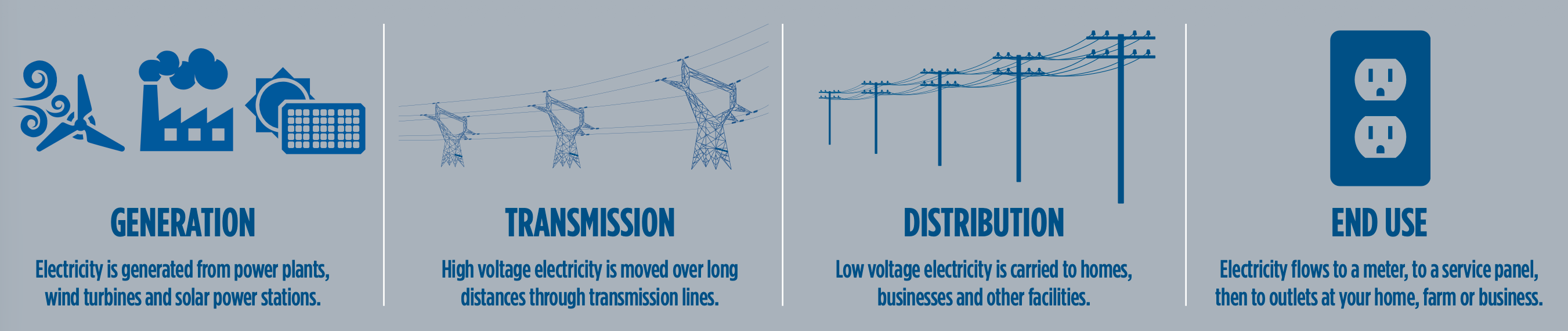
It’s easy to picture your electric provider as one organization that does it all: running power plants, and making and delivering electricity. In reality, it’s more like a local hardware store. The store keeps the community supplied with garden hoses, light bulbs and finishing nails, but it doesn’t make the products that are on its shelves. It buys hoses, light bulbs and nails in bulk from a regional wholesaler. The electric grid works in a similar way.
As a distribution cooperative, REC is the local provider: maintaining lines, responding to outages and delivering reliable service. But much of the electricity itself is purchased upstream — it’s called wholesale power.
Wholesale power, in plain English
Wholesale power is the bulk supply that comes through regional partners and the larger power grid, then flows into REC’s local distribution system.
The regional grid matters because electricity moves through a larger network, not just one neighborhood system. That network balances supply and demand across many communities, using power plants, transmission lines and grid operators. REC takes that regional supply and delivers it reliably to local members.
Why this matters to you
• Wholesale power drives costs. Sixty-five cents of every dollar of your bill is what REC pays to buy electricity in bulk from regional providers.
• Peak demand is when power gets expensive. The hottest summer afternoons and coldest winter mornings require the most supply across a large network and those few hours can drive a big share of overall costs.
• Regional growth increases demand. More homes, businesses and electrification across the region raise load, which affects both the cost and complexity of supplying power reliably.
The practical takeaway
Wholesale power is about having enough electricity available when demand is highest — and that depends on what’s happening across the region, not just locally.
A few ways to help during peak times
• Avoid stacking big electric loads at once (dryer + oven + long hot shower).
• Shift flexible use outside peak use windows when possible (laundry, dishwasher, charging).
• Keep heating and cooling systems efficient (manage thermostat settings, seal drafts)
REC will always work behind-the-scenes to plan for growth, reliability and affordable electricity. Yet, understanding the complex nature of the power grid beyond REC’s local network can help members understand the factors affecting their electric bills and how they can take actions to manage costs.